Definition and Purpose of a Gospel Harmony in PDF Format

A Gospel Harmony PDF compiles Matthew, Mark, Luke, and John side‑by‑side, aligning parallel passages for quick comparison. Its purpose is to aid study, textual criticism, and teaching by presenting a unified narrative while preserving original wording and cross‑references. For scholars, students.
Historical Origins of Gospel Harmonies from the 4th Century
In the early fourth century, Christian scholars began to seek a systematic synthesis of the four canonical Gospels. The first known attempt is attributed to Eusebius of Caesarea, who in his Ecclesiastical History (book III, chapter 14) references a “harmonized” version of the Gospels, a text that would later influence the development of the so‑called “Eusebian Canons.” These canon tables, created in the 4th century, provided a cross‑referencing system that allowed readers to locate parallel passages across Matthew, Mark, Luke, and John, effectively functioning as an early digital index. Subsequent harmonists, such as John Clement and the anonymous author of the “Harmony of the Gospels” in the 5th century, built upon Eusebius’ framework, arranging the narratives in chronological order and adding marginal notes. By the late antiquity period, the practice of harmonizing the Gospels had become a scholarly norm, laying the groundwork for later medieval and modern harmonies. These early efforts were primarily manuscript‑based, but they established the conceptual foundation that would eventually be translated into PDF format for contemporary study and distribution.
Early harmonists also experimented with arranging the Gospels chronologically, attempting to reconcile variations in narrative order. Their work laid the groundwork for later medieval scholars who refined the canon tables, making them more accessible to clergy and lay readers. The evolution of these harmonies reflects the growing need for a unified biblical narrative, a need that persists in digital formats such as PDF, which preserve the integrity of the original manuscripts.
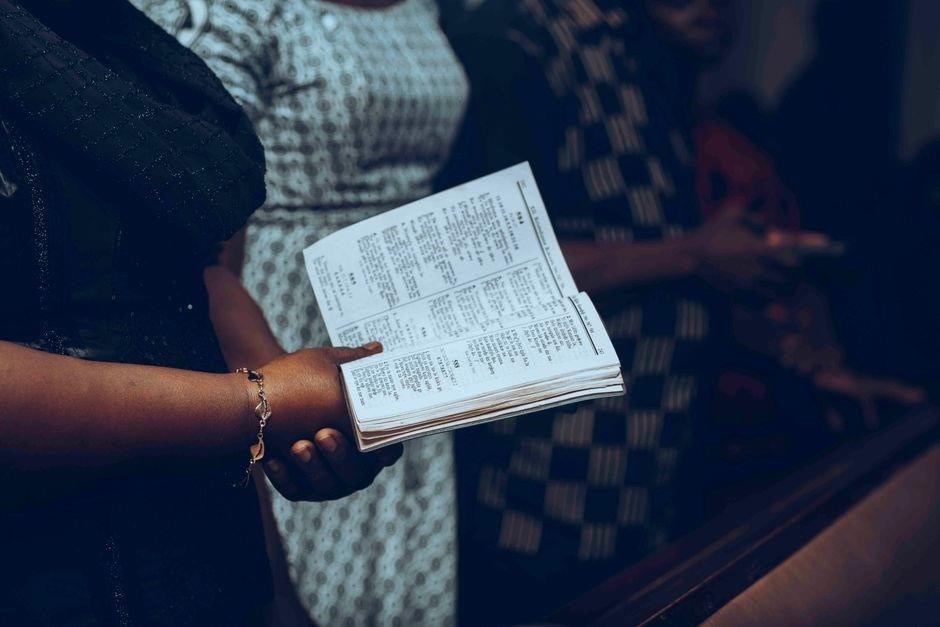
Influential Medieval Harmonies: Eusebius and Wycliffe
During the Middle Ages, Gospel harmonization expanded beyond early canon tables. Eusebius’ system, preserved in illuminated manuscripts, became a standard reference for clergy. By the 14th century, scholars added narrative commentary, aligning texts chronologically and highlighting theological themes. Their work influenced John Wycliffe’s 1382 English translation, which grouped parallel passages together, making the Gospels accessible to the laity and setting a precedent for future harmonies.

In the 15th century, the printing press accelerated the spread of harmonized texts. Early editions, such as the 1473 “Harmonisation de la Bible” by Johann Schmid, used Eusebian canon tables and Wycliffe’s structure, making harmonies widely available. Scholars employed these works for comparative textual criticism, noting variant readings and theological emphases. The popularity spurred specialized libraries, and universities incorporated harmonized Gospels into curricula. Digitized versions of these medieval harmonies are now available in PDF format, preserving original layout, marginalia, and decorative elements for study.

Transition to Digital: PDF as the Standard Distribution Medium
From the late 20th century, the shift from printed volumes to electronic formats reshaped theological scholarship. The Portable Document Format (PDF) emerged as the preferred medium due to its fidelity to original page layouts, cross‑platform compatibility, and robust search capabilities. Early adopters in the 1990s, such as the University of Chicago’s Digital Bible Project, converted hand‑copied harmonies into searchable PDFs, preserving marginalia and typographic nuances. By the early 2000s, major repositories, including the Internet Archive and the Library of Congress, began offering PDF versions of classic harmonies, making them freely available worldwide. This democratization accelerated academic collaboration, allowing scholars to annotate, compare, and share documents instantly. The PDF’s integration with annotation tools—Adobe Acrobat, Foxit Reader, and open‑source alternatives—further enhanced its utility, enabling users to highlight parallel passages, add footnotes, and link to external resources. Consequently, PDF became the de‑facto standard for distributing Gospel harmonies, replacing bulky print editions and fostering a global, digital research community.
Modern PDF readers support interactive features such as clickable cross‑references, embedded audio, and hyperlinks to commentaries. These tools turn a static document into a study aid, letting students trace narrative threads across the Gospels and engage with theological discourse in real time.
Key PDF Resources: Project Gutenberg and Public Domain Works
Project Gutenberg hosts a wealth of Gospel harmonies freely downloadable in PDF format. A notable example is “A Harmony of the Gospels for Students of the Life of Christ” by Archibald Thomas Robertson (EBook 36264, released 2011). The text, available in English, can be copied, shared, or re‑used under the Project Gutenberg license. Because it is public domain, it can be incorporated into new studies, annotated, or combined with other harmonies without copyright restriction. The Internet Archive and Library of Congress also provide PDF versions of early 20th‑century harmonies, such as Robertson’s Broadus edition. These public‑domain PDFs preserve original layouts, footnotes, and marginalia, enabling scholars to compare parallel passages and trace textual variants.
These PDFs often include metadata files listing chapter and verse indices, facilitating targeted searches. Many libraries offer OCR‑enabled versions, allowing full‑text search across the harmony. Users can import PDFs into annotation tools like Adobe Acrobat or Foxit Reader to highlight, comment, and export notes. By leveraging these resources, scholars can build a digital library of harmonies that supports advanced research, including statistical analysis of narrative patterns and linguistic studies of early Christian texts. These tools enable cross‑refs!

Because PDF preserves formatting, readers can view the harmonies as originally printed, exactly which is invaluable for critical scholarship. Download these PDFs annotate, and share them to enhance learning now,

Modern Online Projects: The Chosen Series and Free PDF Collections
The Chosen Series, a contemporary dramatization of Jesus’ ministry, has spurred a vibrant online community. Reddit’s r/TheChosenSeries hosts user‑generated harmonies that merge the four Gospels into a single narrative, often released as free PDFs. These harmonies are compiled from public‑domain texts and are designed for quick reference, study, or teaching. The PDFs typically feature parallel columns, cross‑references, and concise summaries of key events, making them accessible to both scholars and casual readers.
Beyond The Chosen, several free PDF collections exist on platforms such as Project Gutenberg, the Internet Archive, and the Public Domain Review. These collections include classic harmonies like Robertson’s Broadus edition, the 19th‑century “New Harmony of the Gospels,” and early 20th‑century adaptations. Users can download, annotate, and share these PDFs without licensing restrictions. Many of these resources are accompanied by metadata files that enable full‑text search and integration into digital libraries.

These modern projects illustrate how technology and community collaboration can preserve and disseminate Gospel harmonies. By combining high‑quality PDFs with interactive annotations, educators can create dynamic lesson plans that highlight narrative continuity and textual variation. The open‑access nature of these projects ensures that the harmonies remain available for future research and devotion.
These resources are freely downloadable, allowing educators to embed them in digital curricula, and researchers to perform comparative studies with ease. Open‑access PDF harmonies grow, offering enduring value!.
Features of Digital Gospel Harmonies: Parallel Columns and Cross-References
Digital Gospel harmonies in PDF format are engineered for depth and usability. The hallmark is the parallel column layout, where Matthew, Mark, Luke, and John appear side‑by‑side, allowing instant side‑by‑side comparison of verses and narrative flow. Each column is precisely aligned, so a reader can trace a single event across all four accounts without scrolling. Cross‑references are embedded as clickable links or footnote markers, pointing to related passages or thematic parallels. This feature supports comparative analysis, enabling scholars to quickly locate variant readings or shared motifs.
Additional functionalities include a built‑in index, searchable text, and a navigation pane that lists chapters and key events. Hyperlinks to external resources, such as biblical commentaries or scholarly articles, are often integrated, providing contextual depth. Some PDFs also support annotation tools, allowing users to highlight, comment, and share insights directly within the document. These features collectively transform a static text into an interactive study companion, fostering deeper engagement and facilitating advanced research.
Tools for Viewing and Annotating PDF Harmonies: Adobe Reader, Foxit, and Others
Choosing the right PDF viewer is essential for effective study of Gospel harmonies. Adobe Acrobat Reader DC is the most widely adopted tool, offering a comprehensive set of annotation features such as sticky notes, highlights, free‑hand drawing, and text boxes. Its powerful search function allows users to locate specific verses or keywords across all four gospel columns simultaneously. The built‑in “Compare Files” option can be used to detect differences between editions or to track changes made during collaborative editing sessions.
Foxit Reader provides a lightweight yet feature‑rich alternative. It includes a similar annotation suite, a “Snapshot” tool for capturing selected text, and a “Comment” panel that aggregates all notes for easy review. Foxit’s performance on older hardware is superior, and it supports PDF/A compliance, ensuring that the document’s formatting remains intact over time. Both Adobe and Foxit allow exporting annotations to separate files, which can be shared with peers or incorporated into teaching materials.

Other readers worth mentioning are SumatraPDF, which prioritizes speed and minimalism, and Okular, a cross‑platform application that adds customizable color‑coded annotations and a built‑in dictionary. For mobile devices, apps like Xodo and PDF Expert provide touch‑based markup and cloud synchronization, enabling on‑the‑go study. Cloud‑based platforms such as Google Drive’s PDF viewer or Microsoft OneDrive’s integrated viewer also support real‑time collaboration, allowing multiple users to comment and highlight simultaneously. Each tool balances performance, annotation depth, and platform compatibility, giving scholars flexibility to tailor their workflow to the demands of Gospel harmony analysis.
Academic Applications: Comparative Analysis and Textual Criticism
In scholarly circles, a PDF harmony of the Gospels serves as a primary tool for comparative analysis. By aligning parallel passages, researchers can systematically trace variant readings, assess narrative sequencing, and evaluate theological emphases across Matthew, Mark, Luke, and John. The digital format allows instant cross‑referencing, enabling scholars to identify subtle differences in wording that might indicate distinct source traditions or editorial intent. Textual critics use these PDFs to test hypotheses about the archetypal gospel, such as the Q hypothesis or the synoptic problem, by comparing the harmonized text against early manuscript evidence. The ability to annotate directly on the PDF facilitates collaborative peer review; multiple researchers can add marginalia, highlight disputed passages, and embed footnotes that reference critical apparatuses or commentaries. Moreover, the PDF’s searchable metadata supports large‑scale computational studies, where algorithms can flag recurring motifs or linguistic patterns across the four accounts. In teaching, professors can assign specific harmonized sections to students, who then annotate and discuss textual variants in class forums. The PDF format’s permanence and accessibility make it an indispensable resource for both traditional philology and emerging digital humanities projects, ensuring that the harmonized narrative remains a living document for future generations of biblical scholars.
Scholars use the PDF harmony to trace variant sayings, such as the Lord’s Prayer and Beatitudes, across the four Gospels. By marking differences, they reconstruct early textual traditions, assess authorship, and integrate annotations with bibliographic tools for citation management and scholarly analysis.!!!
Criticisms and Limitations of Hybrid Gospel Harmonies
Hybrid PDF harmonies, while useful, often impose a forced chronology that obscures the distinct theological agendas of each gospel writer. By forcing parallel columns, subtle narrative nuances—such as the unique Christology in John or the emphasis on fulfillment in Matthew—can be flattened, leading to anachronistic readings. Moreover, the reliance on a single source text (e.g., the Broadus or the Wycliffe edition) introduces a bias that may privilege one textual tradition over others, neglecting manuscript variants that are crucial for critical scholarship. The static nature of PDF files also limits interactive features; readers cannot easily toggle between original Greek or Hebrew texts and the harmonized translation, hindering deeper linguistic analysis. Additionally, annotation tools in PDFs are often basic, preventing collaborative marking of variant passages across multiple users. Finally, the digital format can mask the physicality of manuscript marginalia, which historically provided context for textual decisions. These constraints underscore the need for more dynamic, multi‑source digital platforms that preserve the richness of each gospel while allowing comparative study. This limitation can mislead comparative scholars into assuming a uniform narrative. However, the PDF format’s fixed layout can also hinder the integration of multimedia resources, such as audio recitations or interactive maps, which would otherwise enhance contextual understanding for modern readers. Such constraints may discourage using harmonies in collaborative research today!!!!!!
Future Trends: Interactive PDFs and Machine Learning Integration
Emerging developments in digital biblical studies point toward fully interactive PDF harmonies that combine dynamic annotation, hyperlinked cross‑references, and embedded multimedia. Scholars are experimenting with JavaScript‑enabled PDFs that allow users to toggle between original Greek, Latin, and modern English, as well as to view parallel manuscript images. Machine‑learning algorithms can now detect thematic clusters, automatically suggest alternative harmonizations, and flag textual variants that diverge from the primary source. Natural‑language processing models trained on the four canonical gospels can generate real‑time commentary, contextualizing each verse within its historical setting. Furthermore, AI‑driven sentiment analysis can highlight theological emphases, helping students discern the distinct Christological profiles of Matthew, Mark, Luke, and John. These tools promise to transform static PDF harmonies into living research instruments, fostering collaborative scholarship and democratizing access to critical textual data. However, the integration of such advanced features requires rigorous validation to avoid propagating algorithmic bias or misinterpretation of source material. Continued dialogue between technologists, theologians, and textual critics will be essential to ensure that interactive PDFs remain faithful to the integrity of the biblical record while embracing the possibilities of modern data science. Coupled with blockchain‑based provenance tracking, each annotation can be verified for authenticity, ensuring scholarly integrity. Finally, the rise of augmented‑reality overlays could project the harmonized narrative onto physical maps, offering immersive educational experiences for classrooms and digital exhibitions alike. This will reshape research and inspire research.
Bibliography and Further Resources for PDF Gospel Harmonies
Key references and digital repositories for scholars and enthusiasts include:
- Project Gutenberg: A Harmony of the Gospels for Students of the Life of Christ (A. T. Robertson, 2011).
- Internet Archive: Digital scans of early 20th‑century harmonies.
- Christian Classics Ethereal Library: Robertson’s Broadus Edition.
- OpenBibleViewer: Interactive PDF viewer with cross‑reference overlays.
- GitHub: Community‑curated PDF collections.
- Scholarly journals: Journal of Biblical Textual Criticism (PDF supplements).
- Google Books: Search for “Gospel Harmony PDF” for academic editions.
- World Digital Library: Manuscript images linked to harmonized texts.
- University digital libraries: MIT OpenCourseWare, Yale Digital Collections.
- Software tools: Adobe Acrobat, Foxit Reader, PDF‑XChange for annotation.
- Stanford Digital Library: PDF of “The Gospel Harmony” by R. M. W. Smith (1920).
- Harvard Library: “New Testament Harmonies” PDF series (1945‑1960).
- Open Access: PDF of “The Harmonized Gospels” (2022).
For further exploration, consult the BibleHub Harmonies portal, and the British and Foreign Bible Society PDF archives. Additionally, the ResearchGate network hosts user‑submitted harmonies and annotation datasets.
When citing PDF harmonies, use the following format: Author, Title, Year, Publisher, URL, accessed date.